Both in reach.
In the ancient game of Go, Q16 is the upper-right star point, the 4-4 opening. A stone there claims no territory and commits to no direction. It keeps both in reach. From that single point a player can later take the solid corner or extend for influence across the board. The flexibility is the whole value, which is why the 4-4 endures as a classic first move.
Frontier Watch holds the same kind of position. The labs at the frontier announce and forecast from inside their own hype cycle, where the reward is selling the next release. Frontier Watch observes from outside it.
Measurement in the public interest.
Q16 PBC is a Delaware public benefit corporation. Its mission: independent, public-interest measurement of the trajectory toward advanced AI, and monitoring of how the labs building it treat user data.
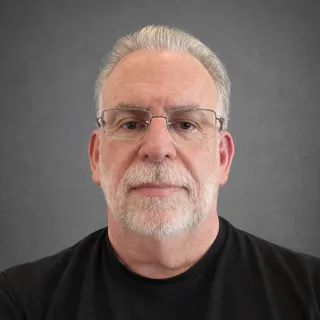
Jeffrey Caruso
Jeffrey Caruso is an internationally recognized cybersecurity analyst, author, and convenor working at the intersection of intelligence, technology, and media. He is the founder of Suits and Spooks, a long-running security summit series that brings together senior intelligence professionals, technologists, policymakers, and storytellers to examine the real-world consequences of national security narratives. Since 2011, Suits and Spooks events have been held in Washington, D.C., New York, and London, with the Whitefish Security Summit representing its next evolution.
Caruso is the author of Inside Cyber Warfare: Mapping the Cyber Underworld (O'Reilly, 2009, 2011, 2024 editions), a foundational work on state and non-state cyber conflict that has been cited by government, military, and academic institutions worldwide. His research and analysis have focused extensively on Russian and Chinese cyber operations, information warfare, and the strategic misuse of digital platforms.
From 2011 to 2017, Caruso served as Founder and Chief Technology Officer of Taia Global, Inc., where he provided cybersecurity consulting, due diligence investigations, and post-breach analysis for corporate and government-adjacent clients, including work supporting major defense and security organizations. Earlier in his career, he founded Project Grey Goose, a pioneering open-source intelligence initiative examining Russia's cyber operations during the Russia–Georgia conflict.
Caruso has briefed and spoken before a wide range of audiences, including the Defense Intelligence Agency, the CIA Open Source Center, NATO's Cooperative Cyber Defence Centre of Excellence, the U.S. Army War College, and international security forums in Europe and Asia. His commentary has appeared in outlets including CNN, NPR, Reuters, The Hollywood Reporter, and the Bulletin of the Atomic Scientists.
He began his career as a technical writer at Microsoft and other technology firms, following earlier service in the United States Coast Guard. Today, his work focuses on bridging the gap between intelligence professionals and the entertainment industry, with an emphasis on ethics, narrative power, and strategic consequence.
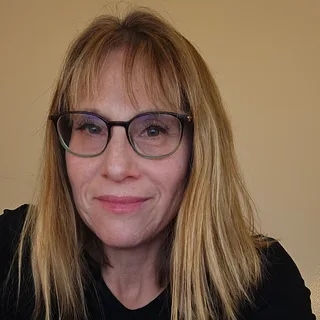
Rachel Grunspan
Rachel Grunspan recently retired from the CIA, where she wore many hats — including game and simulation designer, cyber-threat analyst, senior executive, and futurist. In her last assignment she led a broad innovation effort in human-machine teaming for intelligence, which included the future of war-games and developing new operating models for national security. Earlier assignments included Intelligence Community Director for AIM (Augmenting Intelligence Using Machines) and Dean for CIA's Digital University.
Rachel focused her career on connecting emerging technologies to practical mission needs. She led dozens of future-focused "What If" simulations and games across government, academia, and industry, championed creation of CIA's first agency-wide extended reality (XR) training lab, and promoted the value of narrative and interactive simulation in venues such as South-by-Southwest (SXSW) Interactive.
She was the co-author (née Hanig) of the winning 2007 ODNI Galileo Award paper "A National Security Simulations Center," as well as a recipient of the Presidential Rank Award. Rachel is also the co-author of The Computer Book: From the Abacus to Artificial Intelligence — 250 Milestones in the History of Computer Science.
Today, Rachel advises organizations across the public and private sectors on human-machine teaming, agentic AI, digital twins, and the operating models needed to put these technologies to work. Her research and consulting draw on a career spanning intelligence analysis, technology innovation, senior leadership, and the design of simulations and wargames — helping leaders stress-test decisions, model human behavior, and design the "human layer" of increasingly autonomous systems.